
Observations, 2025: regional brand identity and the Bureaucratic Paradox
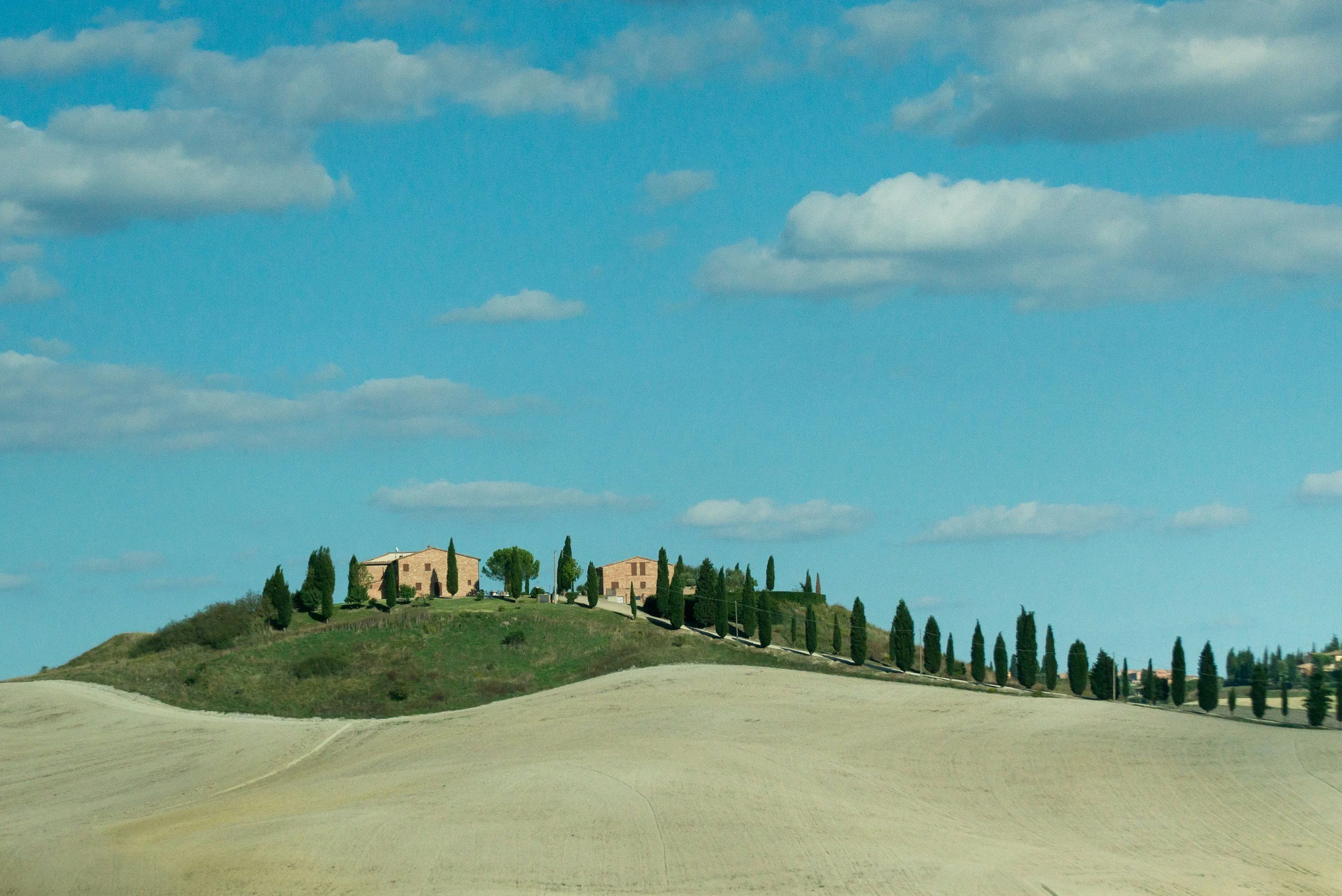
As the year moves toward its close and winter settles quietly over the lakes, the rush of the high season eases, and with it comes a moment to pause. In Italy, real estate has never been only about buildings or transactions; it is shaped just as much by people, habits, expectations, and the slow rhythms that govern how things truly work. Over the past twelve months, certain patterns have become increasingly clear, not through sudden insights or abstract models, but through the accumulation of real encounters, repeated situations, and careful attention to what others across the market have been noticing as well. Somewhere between what foreign buyers imagine Italy to be and how the country actually unfolds day by day, these patterns have taken form, quietly and consistently.
The Human Element in a Digital Age
There is a prevailing myth that the world has gone fully digital, and Italy, with its SPID identities and certified emails, tries hard to project this image. Yet, this year has confirmed a stubborn, almost charming truth: the Italian administrative machine remains fundamentally human.
We have noticed a distinct divergence in outcomes based purely on physical presence. Relying on Consulates abroad to issue a Tax Code (Codice Fiscale) has become a lesson in waiting. And that is why we analyzed the processing times for obtaining a standard Codice Fiscale (Tax Code)—the prerequisite for any property transaction. The disparity is statistically significant. Applications submitted via the consulate (remote) show an average response time of 48–90 days and a 35 percent non-response rate, whereas in-person applications filed directly with the Agenzia delle Entrate are processed in an average of 22 minutes. For those planning an acquisition in 2026, the advice is not technical but practical: do not attempt to manage the bureaucracy from behind a screen in London or New York. Come here. The system works, but it prefers to look you in the eye. For this reason, it is often sensible to invest an additional twenty minutes in obtaining a tax code in person while already on the ground for property viewings, treating it as a natural extension of the search rather than as a separate administrative burden.
The Cost of a Label
In the world of fashion, it has always been understood that part of the price is paid for the name rather than for the fabric. Good things acquire a good reputation, and with reputation come stories, expectations, and, inevitably, a layer of myth. This is not new, and it is not inherently wrong. It is how value has always been narrated, and how it will likely continue to be. What has changed recently is the intensity of this dynamic in the Italian property market. Over the past few years, reputation has begun to weigh more heavily than substance in certain locations. In the established “golden circles” — well-known stretches of Lake Como or the most recognisable Tuscan hills — prices increasingly reflect the power of the name rather than a proportional difference in construction quality, setting, or architectural merit. These places are valuable, without question, but they are also wrapped in layers of symbolism that now carry a measurable cost.
A well-known saying captures this neatly: familiarity breeds value, but also illusion. The more a place is repeated, photographed, and narrated, the more it becomes an idea rather than a location. And ideas, once they solidify, tend to inflate. This does not mean that prime locations lack substance. On the contrary, they are often beautiful for very good reasons. Yet, in the current market, the question is no longer whether they are worth something, but whether they are worth the premium now attached to them, especially when measured against what the same budget can offer elsewhere.
Italy is unusually generous in this respect. Beauty is not confined to a handful of celebrated names; it is distributed with remarkable consistency across the country. Entire regions — less discussed, less branded, and therefore less burdened by myth — offer landscapes, architecture, and cultural depth of equal coherence, if one knows where to look. In that sense, the market is not divided between good and bad locations, but between named places and unnamed ones. The former carry certainty and recognition; the latter require curiosity and guidance. Both have value.

The Green Directive: Theory vs. Atmosphere
The new European directives on energy efficiency have caused a ripple of anxiety, painting a future of rigid compliance and impossible deadlines. While the letter of the law suggests strict obligations, the reality on the ground is more fluid. We are seeing a market that is reacting with fear—discounting unrenovated homes heavily—which ironically creates the year's most interesting opportunity. The gap between the price of a "perfect" energy-efficient home and an older, soulful property has never been wider. For the buyer who possesses the vision to renovate, this regulatory panic is a gift. It allows for the acquisition of historic character at a discount, leaving the bureaucratic harmonization to the future, which in Italy, usually arrives later than scheduled.
Italy’s building stock is old and culturally significant, so a one-size-fits-all retrofit mandate is challenging. The EPBD (Energy Performance of Buildings Directive) itself recognizes this and allows Member States to exempt certain categories of buildings from the strict efficiency requirements – for example, officially protected historic buildings, places of worship, military buildings, holiday homes used <4 months/year, and very small buildings (<50 m²) (energy.ec.europa.eurinnovabili.it). Italy intends to maximally utilize these exemptions to protect its heritage and avoid undue burden on homeowners:
Historic Buildings: Italy has one of Europe’s largest stocks of historic architecture (medieval town centers, centuries-old stone houses, etc.). These often have thick masonry walls and inherently different thermal behavior. The Italian government has signaled it will exempt many historic and artistically significant buildings from mandatory insulation upgrades. Environment Minister Gilberto Pichetto Fratin emphasized that Italy’s rich architectural heritage and unique Mediterranean climate “require differentiated timelines” for efficiency improvements. He called the 2050 climate-neutral goal realistic, but warned that the 2030–2033 interim targets could be “difficult, even impossible” to meet for Italy “without unacceptable costs for households”(thegreenerspace.com). This suggests Italy may slow-roll the requirements for older buildings or seek adjusted targets.
Light-Touch Retrofits: Italian authorities are considering alternative compliance methods for traditional buildings. For example, a working group on Italy’s renovation plan has proposed allowing real-world energy performance monitoring (actual energy usage data) instead of standard theoretical EPC ratings for certain pre-1960 buildings (thegreenerspace.com). The reasoning is that many historic Mediterranean buildings (thick stone construction) perform better in practice than their poor insulation values would suggest, thanks to thermal inertia. Italy may also favor “light-touch” efficiency upgrades – such as improving heating systems, windows, and installing HVAC controls – rather than requiring invasive wall insulation or facade changes on heritage structures (thegreenerspace.com). This approach would improve efficiency where feasible but preserve historic facades.
Exemption Quotas: The Italian government has floated the idea of a partial derogation for a segment of the housing stock. Reports indicate Italy might seek to classify up to roughly 22% of dwellings (several million homes) as eligible for phased or reduced requirements under the directive. These would likely include many rural homes, holiday villas, or older apartments that are hard to retrofit. Essentially, Italy wants to ensure that not every old home is forced to hit class E by 2030 if it proves impractical; a certain share could be given more time or alternate measures. Minister Pichetto Fratin has publicly argued that a significant percentage of Italian buildings should be “exemptable” from the strictest standards due to architectural or technical constraints (ansa.itzappyrent.com).
Small Buildings and Others: As allowed by the EPBD, Italy will also exempt non-primary residences used infrequently (e.g. summer homes), and very small detached buildings (tool sheds, alpine cabins under 50 m², etc.) from the renovation mandates (rinnovabili.itrinnovabili.it). This prevents wasting resources on structures with minimal usage or energy impact.
In summary, Italy is embracing flexibility within the EPBD: prioritizing efficiency upgrades for the worst-performing buildings without sacrificing its historic heritage or imposing crippling costs on homeowners. We see signs of delay – e.g. postponing formal transposition and likely negotiating for more relaxed interim targets – and explicit moves to carve out exceptions for certain building categories. Italy’s strategy is to “reconcile the undeniable efficiency needs with our architectural realities”(thegreenerspace.com), as officials put it. The success of the directive in Italy will hinge on balancing these flexibilities with the overall goal of decarbonizing the building stock.
Market Consequences
The mere prospect of the EPBD’s requirements has already begun to reshape Italy’s property market in the past two years. Buyers, sellers, and financial institutions are factoring in future energy-efficiency mandates, leading to a growing price and liquidity gap between “green” homes and older, inefficient properties:
Price Premium for Efficient Homes: Energy-efficient dwellings in Italy command significantly higher prices than similar inefficient ones. By mid-2025, homes with top energy ratings (classes A and B) were selling for about €500 per square meter more than moderately efficient homes (C–E), and about €700 per m² more than the worst-rated “brown” homes (classes F and G) (crif.it). This represents a “brown discount” on inefficient properties on the order of 30% or more. In Milan, for example – a high-demand market – an A-rated home can fetch roughly 34% higher price (≈€1,000/m² extra) compared to a similar G-rated home (crif.it). Other analyses in early 2024 showed green homes selling for 25–40% higher prices than comparable energy-guzzling homes, with a gap of ~38% in Milan and ~32% in Rome (tg24.sky.it). This price differential has widened in recent years and is expected to grow as the 2030 deadline nears.
Faster Sales and Demand Shift: Not only are “green” homes more expensive, they also sell faster. A study by Century21 Italia found that class A properties sell about 20 days quicker on average than class G properties (approximately 68 days on the market vs. 90 days) (elettricomagazine.it). Buyers increasingly seek out efficient homes to avoid future retrofit costs and to save on energy bills. In 2023, online searches filtered for high-efficiency homes jumped by 72%, indicating surging interest among buyers (elettricomagazine.it). In contrast, owners of poorly rated homes are often forced to cut asking prices or face longer selling times. In southern and rural areas (with older stock), sellers reportedly have had to grant larger discounts to close deals, whereas in North Italy energy-efficient homes hold value with minimal discounting (enordest.it).
Stagnation of Inefficient Home Values: Unrenovated, energy-hogging homes are already being discounted by the market in anticipation of the new regulations. In 2023, Italy’s real estate prices bifurcated: values for new or recently renovated homes (typically energy efficient) rose about 8.9% on average, while values for the oldest, inefficient homes were essentially flat (a mere +0.3% on average) (tg24.sky.it) Over a multi-year period, this trend is even clearer – between 2021 and 2025, green homes slightly appreciated (+2% price), whereas properties in the worst energy classes depreciated by ~4% (crif.it). In short, inefficient dwellings are losing relative value each year (“stranded asset” risk), as buyers factor in the looming cost of mandatory upgrades or the possibility that F/G-class homes may be harder to sell after 2030. Banks have taken note too – many Italian banks now offer “mutui green” (green mortgages) with lower interest rates for energy-efficient homes, while applying stricter terms for low-rated homes, reflecting the expectation that brown homes will not appreciate much and carry resale risk (tg24.sky.it).
Market Discounting of Retrofit Costs: Buyers of older homes are negotiating prices down to account for future renovation expenses. Industry observers note that the “brown discount” often roughly equals the investment needed to bring a G/F-class unit up to compliance. For example, if a homeowner would need to spend €20–30k to insulate and upgrade a heating system, the sale price tends to be knocked down by a similar amount. This dynamic is becoming common, effectively penalizing sellers of inefficient properties. Real estate analysts from CRIF and Nomisma (Italian research institutes) have quantified this gap, warning that owners of energy-inefficient homes could see 5–10% value erosion in the next few years if they don’t renovate, whereas efficient homes may continue to gain value (tg24.sky.it, crif.it).
The current market reaction in Italy thus underscores a significant and growing price gap between energy-efficient and older properties. Unrenovated homes are being discounted – both in asking price and in final sale price – as buyers demand concessions. Meanwhile, efficient homes often sell at a premium and more quickly. This “green vs. brown” divide is a direct consequence of the new regulations and heightened awareness of energy costs. It’s effectively a preview of the EPBD’s impact: the market is incentivizing energy upgrades even before the legal deadlines hit.
Conclusions
Taken together, the patterns of 2025 point to a simple but often overlooked truth: the Italian property market does not reward abstraction. It rewards presence, discernment, and timing. Whether dealing with administration, location, or regulation, outcomes diverge sharply between those who engage with Italy as an idea and those who engage with it as a lived system.
Bureaucracy, despite its digital interfaces, remains relational. Value, despite its glossy narratives, remains unevenly distributed. Regulation, despite its rigid language, unfolds according to local rhythm. None of these elements operate in isolation, and none can be navigated effectively from a distance. The buyer who succeeds is not the one who moves fastest or follows headlines most closely, but the one who understands where fear has outpaced reality, and where reputation has drifted away from substance.
The current energy transition illustrates this clearly. While the direction of travel is unmistakable, the path is neither uniform nor immediate. The market’s early reaction—discounting older properties aggressively—has created a temporary distortion, one that favors buyers with patience, capital discipline, and a long view. Italy’s historic building stock, far from being rendered obsolete, is being re-priced in anticipation of rules that will arrive gradually, selectively, and with adaptation. In this gap between announcement and application lies opportunity.
Similarly, the concentration of capital in a handful of branded locations has not eliminated value elsewhere; it has merely made it less visible. Italy remains structurally abundant in beauty, proportion, and cultural coherence. What differs is not quality, but narrative density. Where names are loud, prices are heavy. Where places remain unnamed, value is still negotiable.
The coming years will likely reward those who resist urgency, question labels, and accept that Italy operates on its own temporal logic. Progress here is rarely linear, but it is remarkably consistent for those willing to meet it on its terms. In that sense, the market ahead is not hostile, nor closed—it is simply selective. And it continues, as it always has, to favor those who look carefully, arrive in person, and think beyond the obvious.
