
The Notary as Public Officer: Why Italy Never Needed Title Insurance

In Italy, the most important signature at a property sale belongs to someone who works for neither the buyer nor the seller. This field note follows the Latin notary from the law schools of medieval Bologna to the modern rogito, sets it against America's invention of title insurance and Australia's Torrens register, and explains what the notary's impartiality protects, and what it leaves to the buyer.
Whose Side Is the Notary On?
Sooner or later, almost every foreign client asks the same question, usually a few days before the deed is signed: whose side is the notary on? The question is reasonable. In the United States, most people around a closing table are either advocates for one party or agents of the title company insuring the deal. In Australia, buyer and seller each instruct their own conveyancer or solicitor.
So when an American or Australian buyer watches a single professional draft the deed, check the public registers, read the text aloud and collect the taxes, the natural assumption is that this person must be working for somebody. The Italian answer is that the notary works for no one. More precisely, the notary works for the legal order itself: a public officer to whom the State delegates part of its own authority, the power to give a private agreement public faith.
The same answer explains a second question that American buyers ask with some surprise: where is the title insurance? Every legal system has to solve one problem. A buyer cannot personally verify that the seller owns what she is selling, that the property is free of mortgages and claims, and that the contract will hold. The Anglo-American tradition largely answers after the fact: the sale goes ahead, and a private insurer promises compensation if a defect surfaces later. The Latin notarial tradition of continental Europe and Latin America answers before the fact: a public officer trained as a jurist screens the transaction before it enters the registers.
One system prices risk; the other tries to filter it out. What follows traces how Italy came to take the second road, beginning in thirteenth-century Bologna, how the English-speaking world took the first, and what the difference means for anyone buying Italian property today.

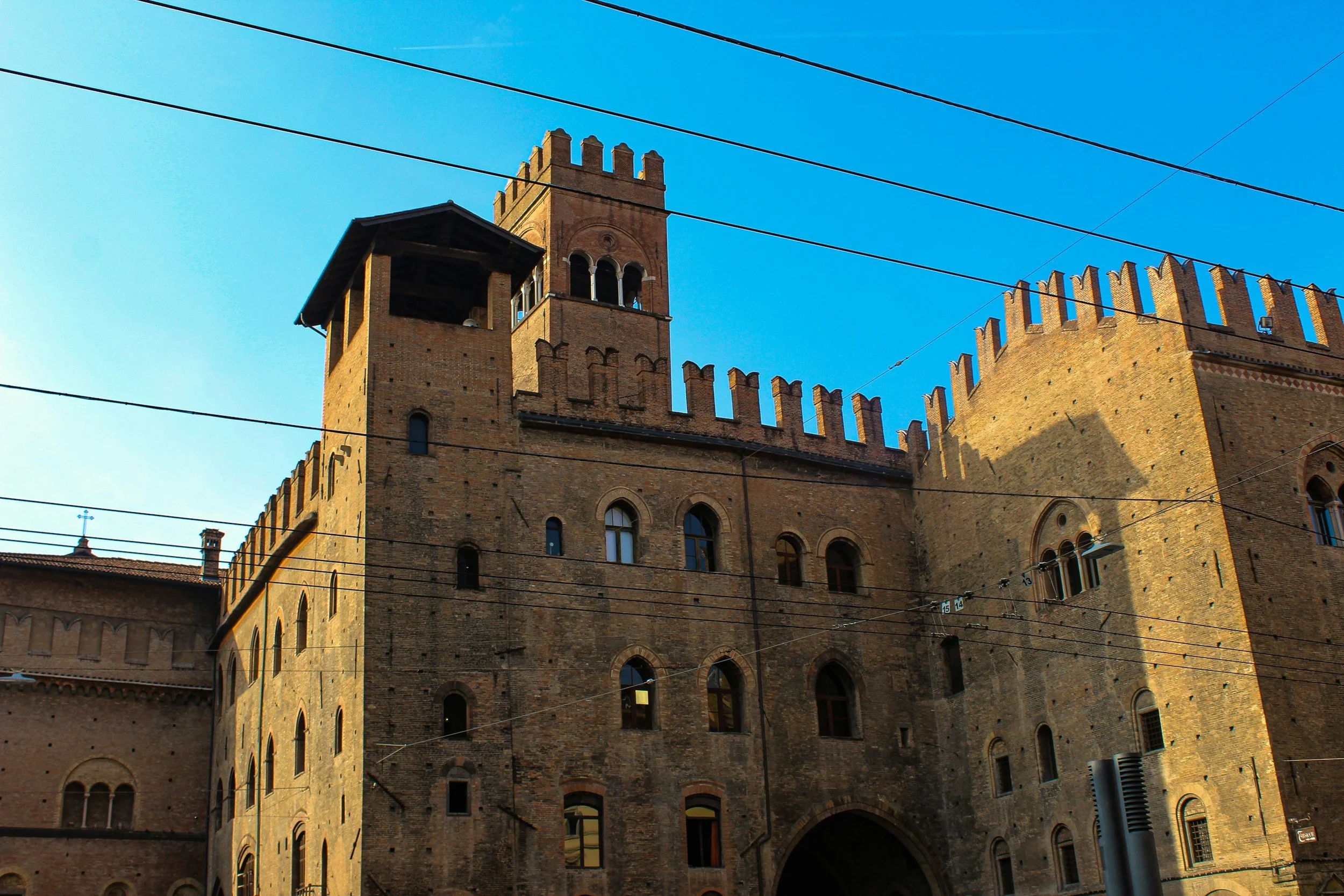
A Scribe With Public Faith: Bologna, 1255
The Italian notary descends from a Roman figure who was not yet a public officer. In the sixth century, Justinian's legislation regulated the tabelliones, professional drafters of private deeds, organised in a corporation recognised by the State but standing outside the public administration, and fixed the formulas that made their documents credible in court (Fondazione Italiana del Notariato). What those documents still lacked was the capacity to prove themselves. A contested deed had to be propped up from outside, usually by witnesses (Università di Trieste, lecture notes on the history of the notariate).
The decisive change happened in the cities of northern Italy between the eleventh and twelfth centuries. In Bologna, notaries began dating deeds by the year, calling them by the Roman name instrumentum, and stating that their own handwriting gave the document probative value (Consiglio Notarile di Roma). By the time the communes emerged, the notary held publica fides: the power to make an act authentic by his signature alone, because a public authority had delegated that power to him (Medievaleggiando). The deed stopped being a memo of what witnesses had seen. It became an instrumentum publicum, proof in itself.
Bologna mattered because its notaries worked next door to Europe's first law school. Irnerius, traditionally credited with founding the Studium around 1088, also drafted a formulary for notaries. In 1219 the commune required everyone who called himself a notary to register with a dedicated office and declare which authority had appointed him; 278 did so that year, and from 1221 the office began examining newcomers (Consiglio Notarile di Roma). Public registration of the profession, followed by a public examination: the outline of today's system was already visible.
Rolandino
Rolandino de' Passaggeri was born in Bologna around 1215, the son of a toll collector, a passagerius, which is where the family name came from. He joined the notaries' guild in 1234 and worked for private clients and for the commune's chancery. His surviving deeds cover sales, wills and donations, and contain almost no usurious contracts, although these made up by far the largest share of notarial business in the city at the time (Treccani, Dizionario Biografico degli Italiani).
From the early 1250s he devoted himself mainly to teaching. Between 1259 and 1261 he presented 140 candidates to the notarial examination, against 145 presented by his great rival Salatiele. His Summa totius artis notariae, completed in 1255, organised the notary's work around contracts, wills and judicial acts, and it displaced every earlier manual while he was still alive (Treccani, DBI). Known simply as the Rolandina, it went through numerous editions and remained indispensable to notarial training in Italy and abroad until the seventeenth century (Treccani).
Rolandino was also a political figure. In 1274 he led the notaries and the popular guilds into Bologna's factional war, sided decisively with the Guelph Geremei against the Lambertazzi, and for roughly a decade was the dominant figure in the commune's popular government. He closed that phase by contributing to the notarial statutes of 1288 (Treccani, DBI). His tomb still stands in front of the Dominican church of San Domenico; destroyed by bombing in 1943, it was rebuilt in 1950.
A public register in 1265
One Bolognese institution deserves particular attention from a reader raised on recording offices. In 1265 the commune created the Ufficio dei Memoriali, which logged the date, the parties, the witnesses, the notary and a summary of every notarial act worth at least twenty Bolognese lire, roughly the value of a pair of oxen. Registration had to happen by the day after signing, on pain of nullity, and the point was to defeat forgery by keeping an official reference copy. The office later recorded full texts and survived, under the name Ufficio del Registro, into the eighteenth century (Consiglio Notarile di Roma).
Here, in a single city, sat the two pillars of the model Italy still uses: a qualified author invested with public faith, and a public register that preserves what that author certifies. The English-speaking world would eventually build registers too, centuries later. It would never build the first pillar.
From Guild to State: The Modern Italian Notary
Modern notarial law was written in Paris. The French law of 25 Ventôse Year XI (16 March 1803) defined notaries as public functionaries established to receive the acts to which the parties must, or wish to, give the authenticity attached to acts of public authority. It became the main model for the notarial laws of the Italian states before unification (Italian Review of Legal History), and in the Napoleonic years it applied directly in Piedmont, Liguria, Tuscany and Lazio (Wolters Kluwer, Le leggi notarili 1805–1879).
Unified Italy passed its first notarial law, no. 2786, on 25 July 1875. It merged the French model with the pre-unification traditions, and one change of vocabulary is revealing. Where the Ventôse law spoke of authenticity, the Italian law described notaries as public officers instituted to receive acts and give them public faith (Fondazione Italiana del Notariato). The medieval publica fides had returned to the statute book. The 1875 law was amended in 1879 and replaced by Law no. 89 of 16 February 1913, which is still in force (Notaio.org).
Its first article is the most concise description of the institution. In translation: notaries are public officers instituted to receive acts between living persons and acts of last will, to give them public faith, to keep them in custody, and to issue copies, certificates and extracts (Law 89/1913, consolidated text). Before taking office, a new notary swears an oath before the local court and receives a seal bearing the national emblem. The law still calls that seal the segno di tabellionato, the tabellion's sign: a thirteenth-century word surviving in a twenty-first-century office.
What public faith means in law
The Civil Code of 1942 supplies the legal effect. Article 2699 defines the atto pubblico as a document drawn up with the required formalities by a notary or another public officer authorised to give it public faith. Article 2700 makes it full proof of three things: that it comes from the officer who drew it up, what the parties declared, and the facts the officer attests took place in his presence. That proof stands until a special forgery action, the querela di falso, succeeds (Brocardi, art. 2700).
The limit is as important as the power. Public faith covers the fact that the parties made certain statements before the notary. It does not certify that those statements are true, and a party's declaration can still be false or simulated (Brocardi). This distinction returns below, because it marks exactly where the notary's protection ends.
A public officer who runs a private practice
The Italian notary is a hybrid. The office is public, but the practice is private: the notary is paid by the clients rather than the State, carries the cost of running the office, competes with colleagues, and answers personally for errors (Notaio.org). Regulated notarial tariffs were abolished in 2012 (QuiFinanza).
Entry is deliberately narrow. A candidate needs a law degree, eighteen months of practice with a notary, a national competitive examination and a further mandatory traineeship, after which notaries are appointed for life. Their number and seats are fixed by a ministerial table, revised every seven years, aiming at no fewer than 5,000 inhabitants per post (Law 89/1913, arts. 4, 5, 16). In November 2022, 5,143 notaries were active in Italy, according to the notaries' pension fund (InformazioneFiscale). For a country of about 59 million people, that is a small, highly selected corps, closer in spirit to a magistracy than to a trade.
What the Notary Actually Does
An Italian property sale normally closes with a public deed signed before the notary, the rogito. To a foreign buyer it can look like a long, formal reading. In fact it is the visible end of a sequence of checks, most of which happen before anyone sits down.
Before the deed: the searches
Unless both parties validly release him, the notary must search the property registers and the cadastre for at least the twenty years preceding the deed, to identify the property exactly and confirm that it is free of charges. The Court of Cassation has repeatedly held that skipping these searches makes the notary liable, most recently in judgment no. 2525 of 30 January 2019 (Notaio Fabio Cosenza). A waiver signed by the buyer alone does not protect the notary; the courts want both parties' agreement and a real reason (Ex Parte Creditoris).
The duty reaches further than mortgages. In one case, a notary was held liable for failing to notice that a mortgaged plot was still burdened by unredeemed civic-use rights, which made it legally unsaleable (Legislazione Tecnica).
In the room: identity, will and language
The notary must be certain of the parties' identity, must personally investigate what they intend, and must direct and take responsibility for drafting the whole deed. He must then read it aloud to them; a deed that was not read to the parties is void (Law 89/1913, arts. 47, 49, 51, 58).
When a party declares that they do not know Italian, the deed can be received with an interpreter chosen by the parties. The interpreter swears an oath before the notary, and a translation is placed beside or beneath the Italian original, signed on every page (Law 89/1913, arts. 54–55). For a foreign buyer, the law guarantees that you understand what you sign. It does not guarantee that anyone in the room is arguing your side.
In the text: declarations in the public interest
Italian law has turned the deed into a checklist of public-interest statements. For existing buildings, the deed must identify the property in the cadastre, refer to the floor plans filed there, and contain the owners' declaration that the cadastral data and plans match the actual state of the property. If any of this is missing, the deed is void (Filodiritto, on art. 29(1-bis) of Law 52/1985).
The seller must also state the details of the building permit. A deed without them cannot be signed and is void, although the permit cited must actually exist and refer to that building (Studio Tecnico Pagliai, on Cass. SS.UU. 8230/2019). Finally, the parties must declare, in formal statements that carry criminal liability if false, how the price was paid, and whether an estate agent was involved, identifying the agent (NT+ Diritto, Il Sole 24 Ore). Since January 2025, the agent's fee may be replaced by the invoice number (Eutekne).
After the deed: taxes, transcription, and the price
The notary collects the taxes due on the deed and pays them to the State; if he fails to do so, a guarantee fund financed by all notaries can be called on to pay them (Law 89/1913, art. 22). He must also have the deed transcribed in the public property registers as quickly as possible, and he owes damages if he lets thirty days pass (Brocardi, art. 2671). Transcription is what makes the purchase effective against third parties: if the same seller sells twice, the buyer who transcribes first prevails.
That leaves a short window between signature and transcription. Since 29 August 2017, if either party asks, the notary must hold the balance of the price and release it to the seller only once the deed is transcribed and no new charge has appeared against the seller (Consiglio Nazionale del Notariato). The money sits in a dedicated account, separate from the notary's own assets, beyond the reach of the notary's creditors and heirs (Notaio Carraffa). Functionally, it is escrow run by a public officer.
Why the Notary Represents No One
The word itself misleads English speakers. In most of the United States, a notary public is a state-commissioned official with a narrow set of duties; unless also an attorney, a notary may not prepare legal documents or give legal advice (National Notary Association). The Council of Europe's commission on the efficiency of justice draws the line clearly. Latin-type notaries are independent and impartial public office-holders to whom the State delegates the authentication of legal documents, while notaries public are typically not lawyers and can only certify signatures (CEPEJ / CNUE report). The Italian notaio belongs entirely to the first category.
In Italy, impartiality is not a matter of personal courtesy. It is built into the structure of the office in four ways.
The law bars the partisan professions. The notarial office cannot be combined with practice as a lawyer, with running a bank, with trading, or with work as a broker or estate agent (Law 89/1913, art. 2). These are precisely the roles that act for one side of a deal.
The notary cannot choose sides by choosing clients. He is obliged to perform his office whenever asked. He may not receive a deed in which his spouse or close relatives are parties, or which contains provisions in his own favour (Law 89/1913, arts. 27–28).
The profession's own rules demand equidistance. Under the deontological principles adopted by the National Council of Notaries, the notary must remain equidistant from the parties' different interests and seek a balanced, unambiguous arrangement aimed at the common security of both. He must also explain the possible consequences of the deed, advise the parties, even proposing solutions different from what they had in mind, and correct his own errors at his own expense (Principi di deontologia professionale dei notai, arts. 41–42).
The choice of notary must be free. It is left to the parties' agreement. When the seller is a builder or a bank, or when an estate agency or credit broker brings the deal, the notary must tell the consumer that they have the right to choose the notary themselves. A notary who relies on intermediaries to channel clients to him breaches his duty of impartiality (Principi di deontologia, art. 31).
But the buyer pays
In practice, the buyer usually chooses the notary and pays the fee. The Civil Code puts the costs of a sale on the buyer unless the parties agree otherwise (Brocardi, art. 1475), although the Court of Cassation has held that this rule does not, by itself, give the buyer the right to choose the notary (Brocardi, Cass. 7637/1991). Many American clients conclude that the notary is therefore their professional. The fee buys the service, not loyalty. All parties are jointly liable to the notary for fees (Law 89/1913, art. 78), and his duties run to both sides equally. When a notary skipped the searches on the strength of a waiver signed only by the buyer, the Court of Cassation held him liable to every party harmed (Ex Parte Creditoris).
What impartiality leaves out
Impartiality has a price, and the foreign buyer pays it without noticing. A notary who owes the same duty to both sides cannot fight for either of them. He is not required to guarantee that the purchase is economically sensible (Legislazione Tecnica). He does not negotiate the price, inspect the roof, or walk the boundaries.
Nor does he certify that the house matches the permits held at the town hall. The seller declares the permit, and the deed is valid as long as that permit really exists and refers to the building, even if the building deviates from it. The Court of Cassation confirmed this reading again in July 2026 (Legislazione Tecnica). As article 2700 of the Civil Code already told us, public faith covers what the parties declared, not whether it was true.
So the honest answer to the foreign buyer's question is this. The notary is on the side of the deed: its legality, its clarity, and its durability for everyone who will rely on it in the public registers decades from now. He protects both parties from a legally defective transaction. He advocates for neither party's interests within a valid one.
The Other Road: How America Invented Title Insurance
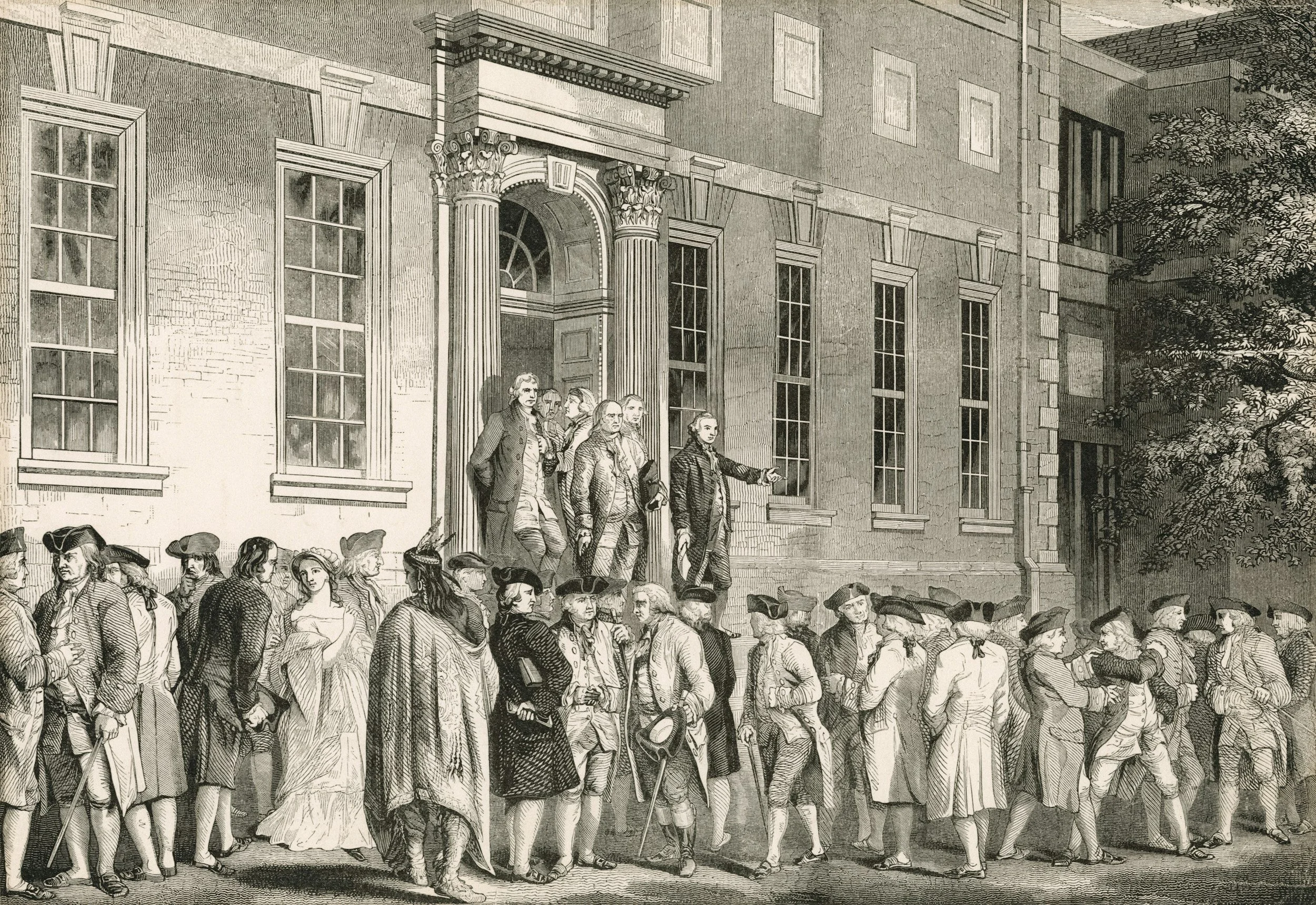
England never built its property system around a Latin notary. In the English tradition, the idea of a preventive administration of justice is much narrower and does not rely on notaries; apart from the scrivener notaries of London, who serve international transactions, English notaries are not comparable to their continental counterparts (Max Planck Encyclopedia of European Private Law). A conveyance was a private deed between private parties, and its validity was a question for the courts after the fact.
A library without an editor
The American colonies added one institution: the public record. Legal historians trace the American recording acts to a statute of the Massachusetts Bay Colony of 1640. An early California Law Review article, already citing the Torrens debate, observed that recording, laid over the complexity of conveyancing law, failed to give a buyer even an approximate guarantee that title really was what the records suggested (California Law Review, via Berkeley Law).
The logic survives intact. The Registry of Deeds of Barnstable County, Massachusetts, describes itself as a library of recordings. Whoever presents a document is its author, the staff catalogue it and shelve it, and the registry does not act as its editor. Its staff may not advise on whether anyone holds good or clear title, and the registry cannot run a title search for you (Barnstable Registry of Deeds). Bologna's Memoriali of 1265 were also a register. The difference is that in Bologna, the author of every entry was a public officer who answered for its contents.
Watson v. Muirhead
Someone still has to read the library. For most of the nineteenth century that was the conveyancer, often not a lawyer, who searched the records and certified the result. In the Pennsylvania case of Watson v. Muirhead (1868), the conveyancer Muirhead found a judgment lien on a property, took a lawyer's opinion that the lien was invalid, and certified the title as clear. The lien was valid, the property was sold at a sheriff's sale, and the Pennsylvania Supreme Court held Muirhead not liable: by relying on counsel, he had used due care (First American Title). The buyer carried the whole loss.
The response was commercial rather than institutional. On 28 March 1876, the Philadelphia conveyancer Joshua Morris and several colleagues incorporated the Real Estate Title Insurance Company of Philadelphia, generally regarded as the world's first title insurer of the modern kind. Its stated purpose was to insure buyers of real estate and mortgage lenders against losses from defective titles, liens and encumbrances (Wikipedia, Commonwealth Land Title Insurance Company). An earlier Pennsylvania venture had been formed in 1853 (Wikipedia, Title insurance).
What the premium actually buys
Title insurance is an unusual kind of insurance. In 2005, only 5 percent of title insurance premiums went to pay losses, against 73 percent for property-casualty insurance, according to the US Government Accountability Office. Title agents, who search and examine the records, typically kept 80 to 90 percent of the premium (GAO-07-401). The industry's own study puts claims costs at just over 4 percent of premiums for 2013–2022 and attributes the low figure to the curative work done before closing (American Land Title Association).
Read those numbers carefully and a more interesting picture emerges. America did not simply choose compensation over prevention. It privatised prevention: most of what an American buyer pays for title insurance buys a search and a clean-up of the records, the work an Italian notary does as a public officer. What the insurer adds on top is an indemnity for whatever the search misses. The American buyer's ultimate protection is a claim against a company, within a policy limit and subject to its exceptions. The Italian buyer's protection is a deed that the law treats as proof.
The Australian Road: A Register the State Guarantees

Australian readers start from a different place, and a closer one. The Real Property Act, which passed South Australia's first parliament under responsible government on 27 January 1858, attacked exactly the problem that produced title insurance in Pennsylvania: slow, expensive and insecure transfers based on long private deeds that had to be kept for a century or more (SA History Hub).
Torrens title rests on four principles. Title passes by registration on a public register, not by the execution of deeds. It is evidenced by a certificate issued and guaranteed by a government authority. Once registered, a purchase is indefeasible unless the buyer was party to fraud. And innocent people who lose an interest are guaranteed either the interest itself or compensation (SA History Hub). Robert Torrens drew on the ideas of Ulrich Hübbe, a German lawyer living in South Australia (Wikipedia, Torrens title), a reminder of the continental land-book tradition discussed in our earlier field note, The Legible Land.
Australia, in other words, also chose prevention over indemnity. It simply placed the public check in a different spot: in the register, which the State examines and guarantees, rather than in an officer who screens each deed as it is made. What Australia did not adopt is the impartial drafter. Buyer and seller still instruct their own conveyancers or solicitors, each of whom works for one side.
What the State does not guarantee
Title insurance exists in Australia, but it plays a supporting role. The NSW Law Society Journal puts it plainly: the State guarantee does not cover every title-related risk. Since the first Torrens statutes, planning, building and development laws have grown up around conveyancing, and non-compliance with them can amount to a defect in title. Title insurance works alongside Torrens to cover the defects that fall outside its safety net (Law Society Journal).
The typical Australian policy is a one-off premium covering risks such as enforcement action over unapproved building works, boundary and survey defects, breaches of zoning or planning law, outstanding rates and taxes, and fraud or identity theft (Stewart Title, in Proctor).
That list deserves a second look from anyone buying in Italy. Torrens guarantees the register; the Italian notary guarantees the deed. Neither guarantees the building. The unapproved deck in Brisbane and the undeclared attic conversion in Tuscany are the same problem: a risk created by twentieth-century planning law, which nineteenth-century property systems were never designed to police. Australia fills that gap, when it is filled at all, with a private insurance policy. In Italy, it is filled by technical due diligence before the deed, or not at all.
Two Philosophies of Trust
It would be easy, and wrong, to turn this comparison into a league table. The economist Benito Arruñada, who has studied property registries across legal systems, argues that recording of deeds combined with title insurance, registration of rights, and even purely private arrangements provide functionally similar services. Which one performs best depends on the volume of transactions, the risk of political interference and the consistency of regulation (Arruñada, Universitat Pompeu Fabra working paper). The three systems below are different answers to the same question, each with its own costs.
The register Italy shares with America
One detail surprises most readers. Outside the former Habsburg territories, Italy's property registers follow the model of the French transcription law of 23 March 1855 (Provincia autonoma di Trento). Like an American recording office, they record deeds and settle priority between competing buyers; they do not certify that the seller owned what he sold.
The difference lies in who is allowed to approach the shelf. Under article 2657 of the Civil Code, transcription is possible only on the basis of a court judgment, a public deed or a private writing whose signatures have been authenticated or judicially verified (Brocardi, art. 2657), and the Court of Cassation treats that list as exhaustive (Brocardi, Cass. 3674/1995). In practice, almost every sale enters the Italian register through a notary. The library is the same kind of library. In Italy, every book has passed through an editor.
The Habsburg exception
In the provinces of Trento, Bolzano, Trieste and Gorizia, and in some municipalities of the provinces of Belluno, Brescia, Udine and Vicenza, the Austrian land-book system survives under Royal Decree no. 499 of 1929. There, the deed only creates obligations between the parties; the right itself is acquired at the moment it is entered in the land book (European e-Justice Portal). A buyer in Trentino or Trieste therefore passes through two public filters: the notary who drafts the deed and the land-book office, supervised by a judge, that decides whether to register it. It is the closest Italian relative of the Torrens system.
Italy's own safety net
The Italian model also has an indemnity layer; it simply sits behind the filter rather than in place of it. Every notary must be covered by a collective civil-liability insurance organised by the National Council of Notaries. A guarantee fund, financed by compulsory contributions from all notaries, compensates damage caused by crimes a notary commits in office when insurance does not cover it (Law 89/1913, arts. 19–22).
Nor is the Latin model a local curiosity. The International Union of Notaries, founded in Buenos Aires in 1948, counts 93 member notariats, including 22 of the 27 EU member states and 15 of the G20. By its own count, the system operates in almost 120 countries, home to about two thirds of the world's population (UINL). Seen from Rome, Paris, Madrid, Berlin or Buenos Aires, it is title insurance that looks exotic.
The Latin model has its critics, mostly about cost and closed access, and Italy has responded in part. Notarial tariffs were abolished in 2012, and the same year's liberalisation decree added five hundred posts to the national table of notarial seats (Law 89/1913, note to art. 4). The underlying bargain has not changed. The State licenses a small number of jurists, forbids them to take sides, and in exchange treats their deeds as proof.
Where the Notary's Protection Ends
The Italian system is strongest where it was designed to be strong: the identity and capacity of the parties, the chain of transfers in the registers, and the mortgages and charges recorded there. Its gaps lie where no register and no deed can see. Four deserve a foreign buyer's attention, and one of them has just been closed by law.
The building itself
As we have seen, the notary records the seller's statements about permits and cadastral data but does not check them against the building. When a property deviates from its permit, the deed usually remains valid; the buyer's remedies are termination for breach or damages against the seller, not the nullity of the sale (Studio Tecnico Pagliai). The irregularity, meanwhile, stays with the building. This is the terrain of our earlier field note, Beyond the Cadastral Facade.
Rights that grow out of possession
Under the Civil Code, twenty years of continuous possession are enough to acquire ownership of real property (FIMAA Milano, on art. 1158). Italian courts resolve a conflict between a buyer and someone who has acquired by adverse possession (usucapione) in favour of the latter, whatever the order of transcription. The priority rule of article 2644 settles conflicts only between successive buyers from the same seller (Comparazione e Diritto Civile, citing Cass. 18888/2008).
Easements work in a similar way. A right of way or a water pipe exercised through visible, permanent works for the period the law requires can be acquired by adverse possession (Consulenza Legale Italia). The registers record deeds. They cannot record who has crossed a field every morning for twenty years; only a visit, a survey and a conversation with the neighbours can.
Condominium arrears
In an apartment building, the buyer becomes jointly liable with the seller for condominium contributions relating to the current year and the previous one (Studio Cataldi). The year in question is the building's financial year, not the calendar year (DeQuo). Those figures sit with the building's administrator, not in any register the notary searches.
The gap Italy insured, and then closed
For decades, one risk escaped every notary: property the seller had received as a gift. If the donor's estate later proved too small to satisfy the shares the law reserves to close family members, those heirs could act within ten years of the death. They could even reclaim the property from a later buyer, provided twenty years had not passed since the gift was transcribed, or they had lodged a formal opposition (EC News). No search could rule this out, because the risk depended on a death and an estate that did not yet exist.
This is precisely where Italy's only real title-insurance market grew. Lloyd's and Aon, for example, offered a policy called Donazione Sicura, insuring buyers and lenders of donated property without time limits; its promoters estimated that about 7 percent of Italian real estate was considered risky, and hard to sell, because of its donation history (AziendaBanca).
Then the legislature removed the risk itself. Article 44 of Law no. 182 of 2 December 2025, in force since 18 December 2025, rewrote articles 561 and 563 of the Civil Code. Reducing a gift no longer affects third parties who bought from the donee, unless the heir's claim was transcribed before their purchase (Studio Legale Castello). The heirs' protection becomes a claim for money against the donee. For successions already under way, heirs could keep the old remedy only by notifying and transcribing a formal opposition within six months (Eutekne), a window that closed on 18 June 2026. Commentators now expect banks to lend more readily on donated property and the need for such policies to shrink (Brocardi).
The episode is a small parable of the whole system. Faced with a risk its notaries could not screen, Italy first let a small insurance market price it, then legislated it away. Even here, the Latin instinct was to remove the risk rather than indemnify it.
A division of labour
None of this is a reason for alarm; it is a division of labour. The notary guarantees that the deed is lawful, clear and effective against the world. Whether it is the right deed, for the right building, at the right price, is a question the Italian system deliberately leaves to the buyer and to whoever the buyer chooses to have on their side: a lawyer, a surveyor, an independent buyer's agent.
More than seven and a half centuries after Rolandino's Summa, the Italian notary still does one thing exceptionally well. He makes a private agreement trustworthy to everyone who will ever rely on it. Knowing that this is all he is meant to do is the beginning of buying well in Italy.
Sources
History of the notariate
Passaggeri, Rolandino, M. Giansante, Dizionario Biografico degli Italiani, vol. 81, Treccani, 2014
Rolandino de' Passaggeri, Enciclopedia online, Treccani
La Storia del Notariato, Consiglio Notarile dei Distretti Riuniti di Roma, Velletri e Civitavecchia
Formazione e tipicità del notaio: da Giustiniano all'età della Restaurazione, Fondazione Italiana del Notariato
Notai e pubblica fede dall'età napoleonica all'attualità, C. Pennazzi Catalani, Fondazione Italiana del Notariato
Storia del notariato, lezioni 14–15, Università degli Studi di Trieste
Il notariato nel Basso Medioevo, Medievaleggiando
Per una storia del notariato nell'Italia centro-settentrionale tra ascesa e declino, Italian Review of Legal History, 7 (2021)
Le leggi notarili dagli Stati preunitari al Regno d'Italia (1805–1879), Wolters Kluwer
La funzione notarile, Notaio.org
Italian law and practice
Law no. 89 of 16 February 1913, consolidated text, Consiglio Notarile di Ascoli Piceno
Principi di deontologia professionale dei notai, Consiglio Nazionale del Notariato, 2008
Civil Code, via Brocardi: art. 1475, art. 2657, art. 2671, art. 2700; Cass. 7637/1991; Cass. 3674/1995
La Cassazione insiste su visure e provenienze, Notaio Fabio Cosenza
Responsabilità del notaio per omessa acquisizione di visure, Ex Parte Creditoris
Le visure del notaio nella compravendita immobiliare, Legislazione Tecnica
La validità della compravendita di immobile abusivo (Cass. 24226/2026), Legislazione Tecnica, September 2026
Le nuove regole dettate in materia di conformità dei dati catastali, Filodiritto
Studio Tecnico Pagliai, on Cass. SS.UU. 8230/2019: validity of the deed and remedies for irregularities
Compravendita, l'importo della provvigione esce dal rogito, NT+ Diritto, Il Sole 24 Ore
Provvigione del mediatore con indicazione facoltativa in atto, Eutekne, 2025
Il deposito del prezzo, Consiglio Nazionale del Notariato
Il deposito del prezzo di vendita presso il notaio, Notaio Carraffa
Il deposito prezzo, Notaio Arcella
Quanto guadagna un notaio, InformazioneFiscale
Quanto guadagna un notaio: le cifre, QuiFinanza
L'usucapione in condominio, M. Figini, FIMAA Milano, 2022
Note on usucapione and transcription, Comparazione e Diritto Civile
L'usucapione della servitù, Consulenza Legale Italia
Il neo condomino non risponde mai per la morosità oltre il biennio, Studio Cataldi
Debiti dei condomini morosi, DeQuo
Lloyd's e Aon lanciano la polizza Donazione Sicura, AziendaBanca
Riforma delle donazioni 2025 (art. 563 c.c.), Studio Legale Castello
La riforma dell'azione di restituzione libera la circolazione degli immobili donati, Eutekne
Compri una casa donata: rischi di perderla?, Brocardi, 2026
Il sistema tavolare, Provincia autonoma di Trento
Land registers in EU countries: Italy, European e-Justice Portal
United States
Notaries and Notarios, National Notary Association
The Recording Acts and Titles by Adverse Possession and Prescription, California Law Review, via Berkeley Law
Frequently Asked Questions, Barnstable County Registry of Deeds
History of Title Insurance, First American Title
Commonwealth Land Title Insurance Company and Title insurance, Wikipedia
Title Insurance: Actions Needed to Improve Oversight of the Title Industry and Better Protect Consumers (GAO-07-401), US Government Accountability Office, 2007
Analysis of Claims and Claims-Related Losses in the Land Title Insurance Industry, American Land Title Association, 2024
Australia
Torrens Title, SA History Hub, History Trust of South Australia
Torrens title, Wikipedia
The role of title insurance in a Torrens Title jurisdiction, P. Watkins, Law Society Journal (NSW), 2015
Transactions more than paperwork, Proctor, Queensland Law Society, 2025
Comparative perspectives
Notary Public, M. Wenckstern, Max Planck Encyclopedia of European Private Law, 2012
CEPEJ study on the legal professions: notaries, Council of Europe, 2019
Working paper no. 564 on property enforcement, recording and registration, B. Arruñada, Universitat Pompeu Fabra
About us, International Union of Notaries (UINL)
